
Athlete
Mind
A digital self-coaching platform blending sport psychology with AI-powered UX, helping athletes build daily mental training habits without needing a professional coach.
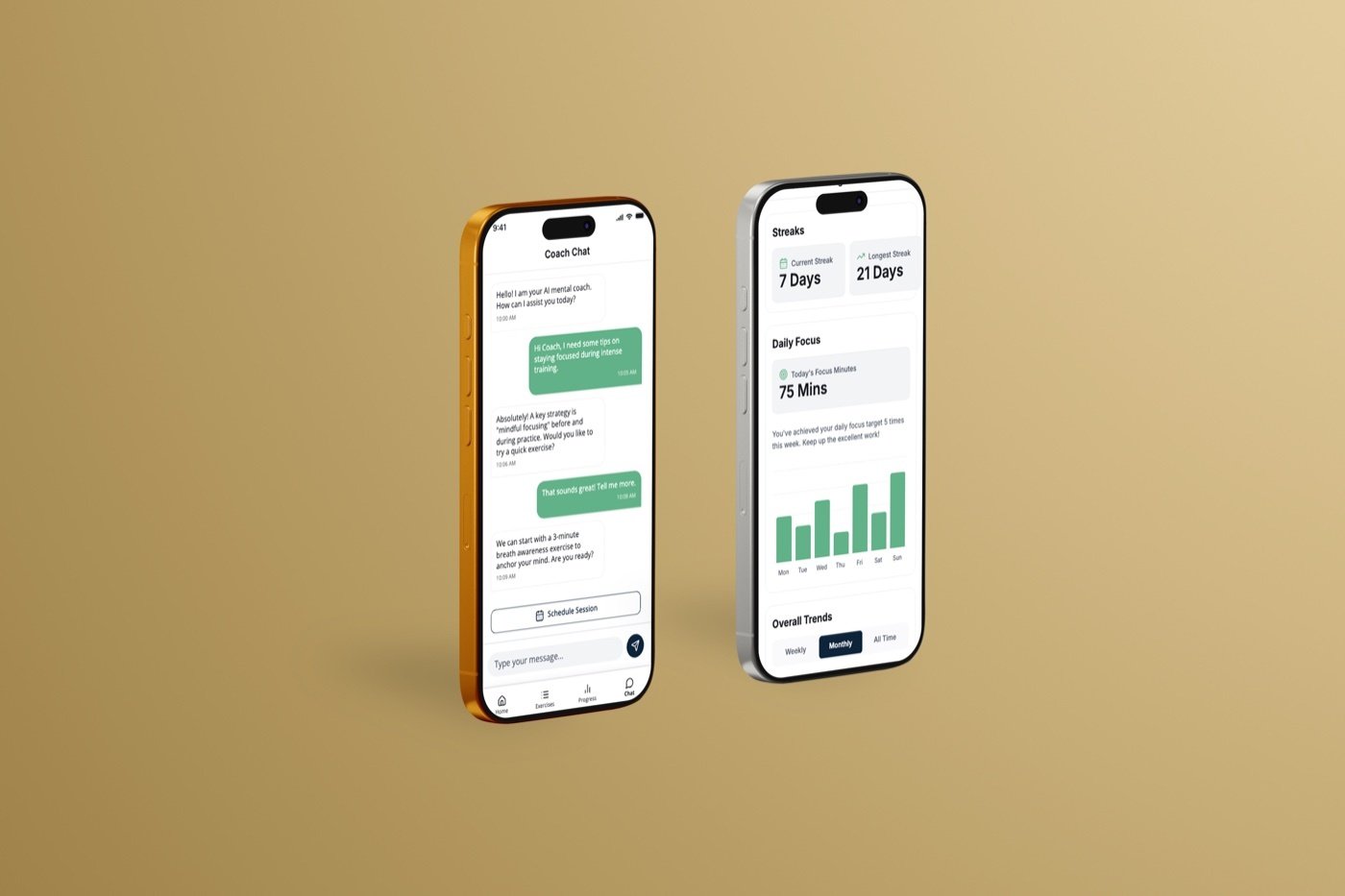
Athlete Mind was a personal project to explore what full AI-driven product design actually looks like in 2025. The entire workflow was developed in consultation with ChatGPT, following the double diamond methodology — from discovery and definition through ideation and prototyping. AI tools were used at every stage.
The platform helps amateur and professional athletes build focus, motivation, and psychological resilience through short daily mental exercises and optional expert support from certified sport psychologists.
Mental training
without a coach.
Most athletes know mental training matters. Few actually do it consistently. Existing resources are too abstract, too time-consuming, or simply not built for anyone outside the professional market.
- Mental exercises feel time-consuming or abstract — adoption stays low
- Athletes lack structured, sport-specific focus rituals for competition days
- Amateurs resist tools that feel "too professional" or inaccessible
- Generic mindfulness apps (Calm, Headspace) miss the performance dimension entirely
"Athletes struggle to integrate mental training into their daily routine, because current resources are either too abstract, too time-consuming, or not engaging enough."
Psychology meets
product design.
Methods used
Key findings
Short, gamified challenges increase adherence and create habit loops. Sessions of 3–5 minutes with progressive rewards outperform longer, unstructured exercises.
Mindfulness-based interventions — breathing, focus drills — improve performance in sports like tennis and archery. Context matters, and the research is consistent on this.
Mental imagery is proven to enhance motor skill acquisition and confidence. Athletes who practice visualization regularly perform better under pressure.
Relaxation and reflection tools reduce burnout and improve long-term consistency. Recovery is consistently underrepresented in existing fitness and wellness apps.
Competitor landscape
Great mindfulness tools, but too generic for athletes. Missing sport-specific context and any performance orientation.
Sports-focused mental training, but often paywalled and not engaging enough to build lasting habits.
Very strong in physical workouts, but little emphasis on psychology or mental performance training.
Problem framing
Athletes need a way to stay consistent with mental training because currently exercises feel time-consuming or abstract, which results in low adoption. Athlete Mind could help by offering short, daily, gamified challenges integrated into routines.
Athletes need a way to improve focus during competition because currently they lack structured, sport-specific rituals, which results in anxiety and underperformance. Athlete Mind could help by providing guided pre-performance routines.
Amateurs and semi-pros need a way to understand the value of sport psychology because currently it feels "too professional" or inaccessible. Athlete Mind could help by normalizing and simplifying access to mental training.
Initial hypotheses
- If Athlete Mind delivers 3–5 min daily challenges, adoption will increase because they fit into busy lives.
- If the app integrates sport-specific drills, athletes will find it more relevant than generic meditation apps.
- If users see quick wins (streaks, improvements), they will remain motivated long term.
Daily reps for
the mind.
Athlete Mind takes sport psychology principles and puts them somewhere athletes will actually use them. A mobile-first, gamified format. Short daily challenges, sport-specific routines, an AI coach that responds to context.
Core MVP features
Short, gamified tasks designed to fit into an athlete's routine, encouraging consistency and progressive growth.
A lightweight system for monitoring improvements and celebrating milestones without overwhelming the user.
An integrated assistant providing instant feedback, encouragement, and suggestions tailored to the athlete's sport and goals.
Breathing techniques, visualization, and focus drills tailored to the user's sport and current performance goals.
A bridge between self-coaching and professional support — users can book sessions with certified sport psychologists directly from the app.
Habit-building through consistent daily nudges, integrated into the athlete's existing training schedule.
Logo & moodboard
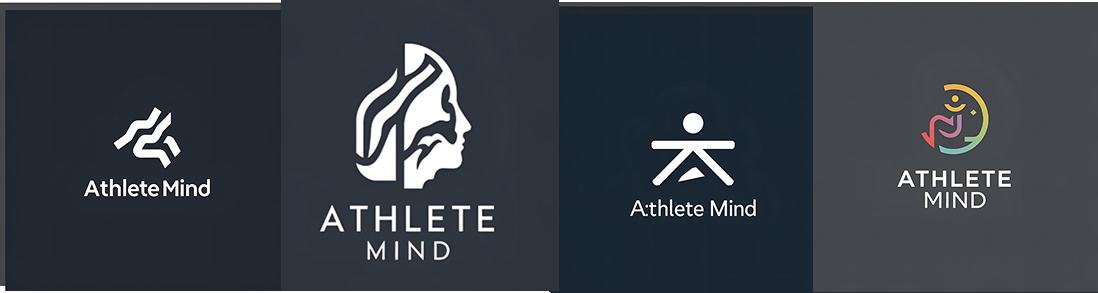
I experimented with generating a logo for Athlete Mind — AI tools kept drifting toward geometric mountain motifs, which didn't capture the brand vision. I shifted to a moodboard using Adobe Firefly to define the aesthetic direction: minimalist, modern, calming but energetic, with deep navy and vibrant accents.

The design,
view by view.
Structure before style
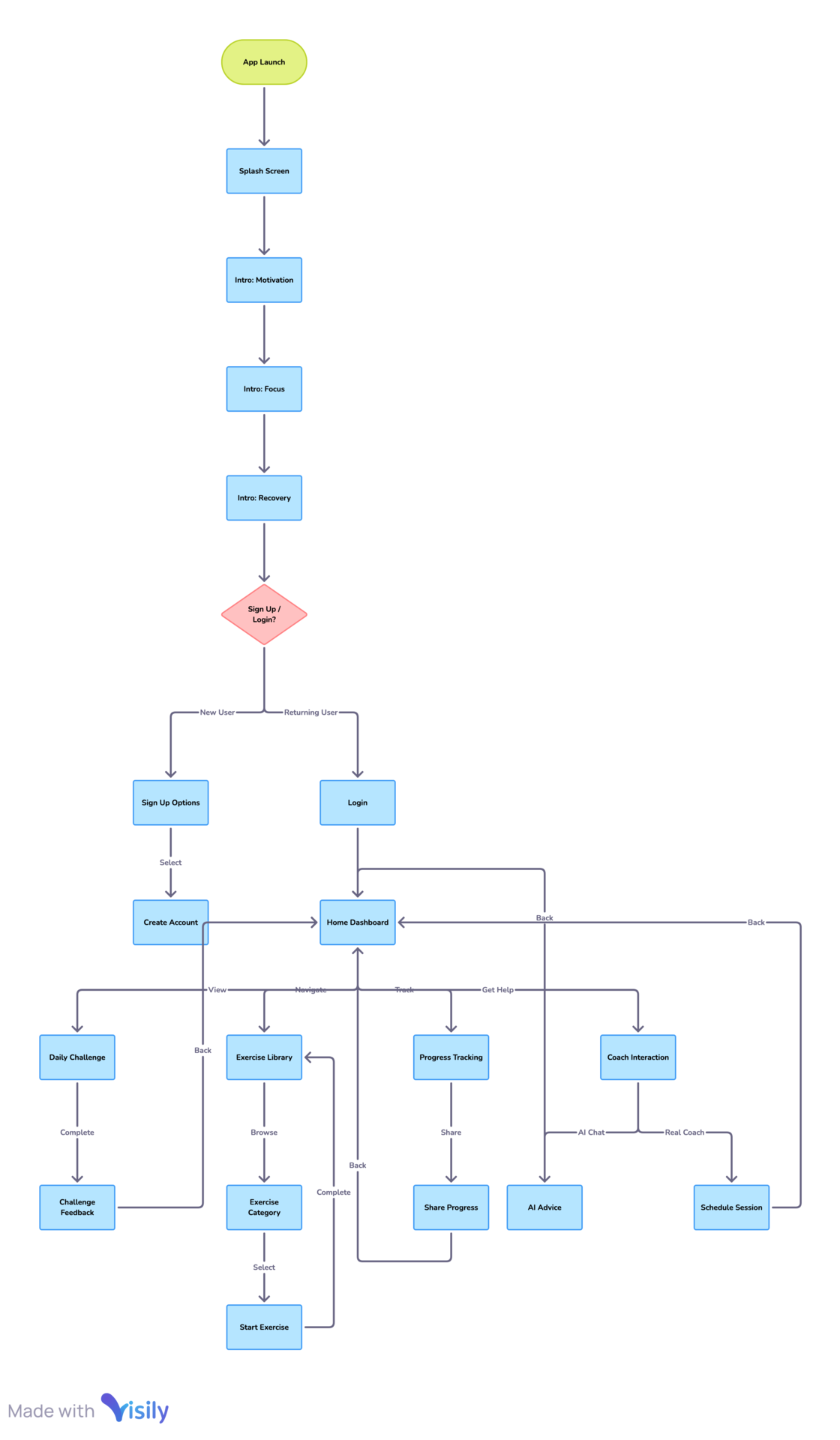
Wireframes were generated via Visily — the most successful of the AI tools tested for layout and user flow diagramming. The output was already in colour, which was unexpected. Structure was validated before visual design began, ensuring information hierarchy was correct before investing in polish.
- Visily produced the most coherent wireframes
- Color and user flow diagrams generated simultaneously
- Core screens validated before high-fidelity work
The app takes shape
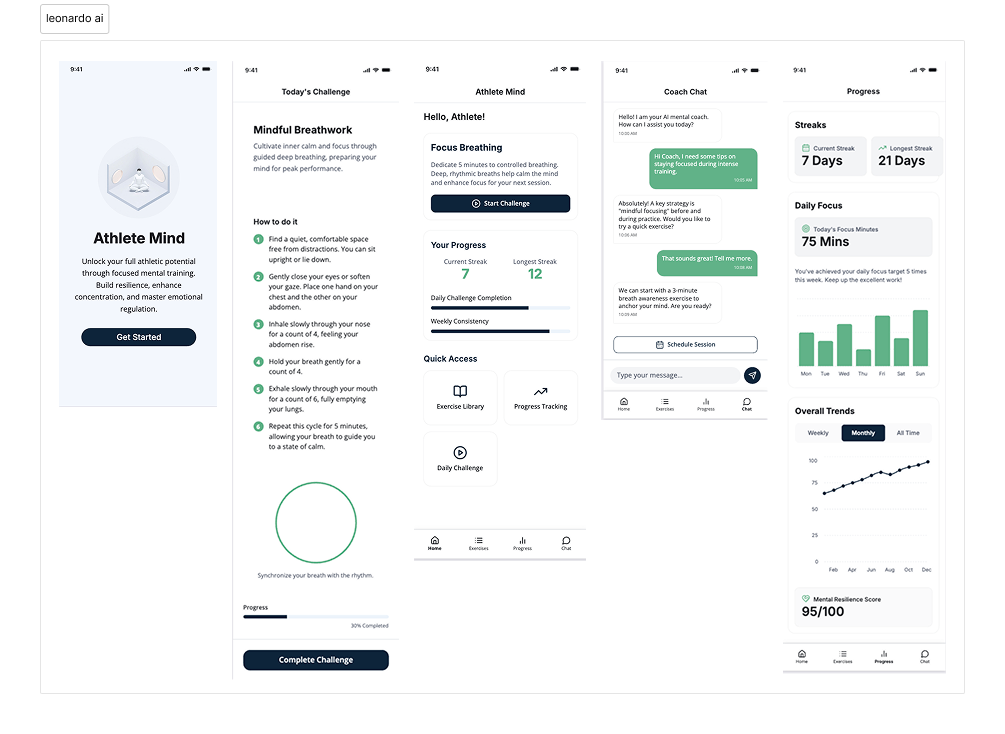
Leonardo AI (now part of Google's ecosystem) handled the high-fidelity visual mockups. The outputs shared a similar vibe with Visily: strong generative character, stylistically consistent. Not quite ready to ship, but genuinely useful as creative inspiration and a quick gut-check on concept viability.
- Navy/mint palette reflects alert, grounded mental state
- Gamified progress elements drive daily return
- Consistent aesthetic across AI tools confirmed concept direction
From design to working app
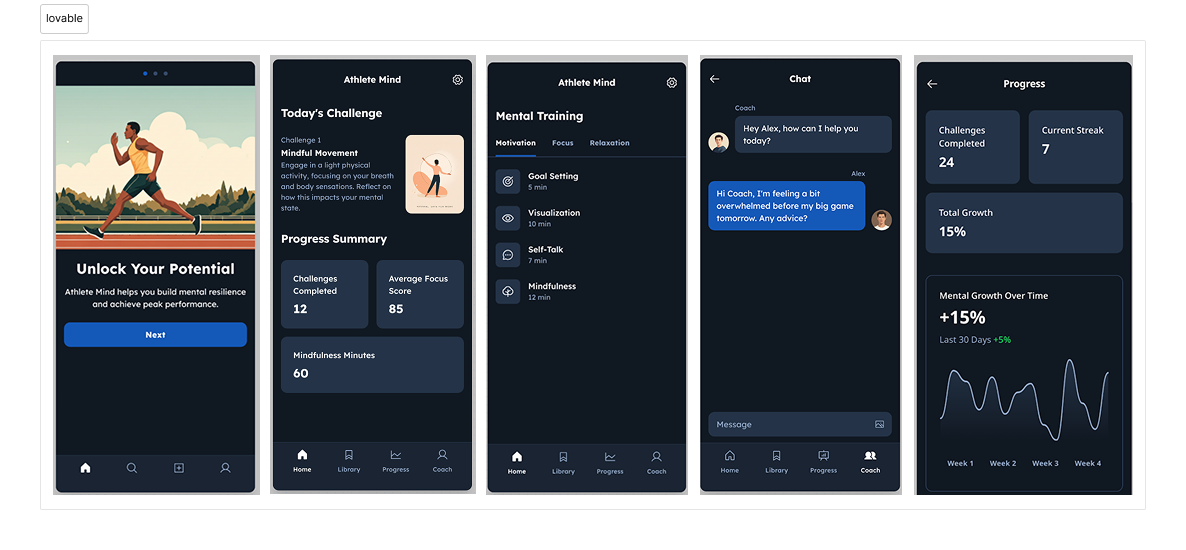
Lovable handled the functional prototype — moving from static screens to something actually clickable. The output was rough in places, and the UI carries the same AI-homogeneity you see across the other tools. Base44 came out as the stronger platform for continued iteration.
- Lovable generated a working app skeleton
- Base44 identified as strongest for continued iteration
- View Base44 prototype ↗
What I learned
from the machine.
The core concept held up across five different AI design platforms without falling apart. That's a signal worth paying attention to — the problem framing and solution direction are solid, independent of whatever tool was doing the rendering.
AI tools made ideation and wireframing dramatically faster. The decisions that actually mattered though - hierarchy, flow, tone - those still needed a human. AI is a co-pilot. Not a designer.
AI-generated UI is starting to look the same everywhere. Stronger conceptual direction and a distinct brand personality matter more than ever. Execution quality alone won't cut it anymore.